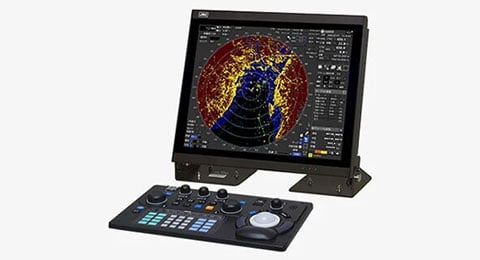
- APRS (Anti-Parametric Rolling System)


The APRS (Anti-Parametric Rolling System) JAZ-501 series analyzes the risk of parametric rolling using wave data acquired from existing radar and a motion model of the vessel.
By clearly visualizing high‑risk areas on a polar chart, APRS supports the selection of safe courses and speeds to avoid encountering parametric rolling that can lead to serious incidents such as container loss, thereby helping to prevent roll-related accidents before they occur.
Features
1. Real-time*¹ Provision of Optimal Course and Speed
・Detects waves and swells using the X‑band Radar wave analysis function
・Analyzes motion predictions based on optimized motion models for each ship type
・Visualizes high‑risk areas on a polar chart by combining motion models with wave data
・Enables risk prediction and route/speed optimization for risk avoidance
*¹ Latest information is provided through periodic automatic updates (e.g. every 1 minute)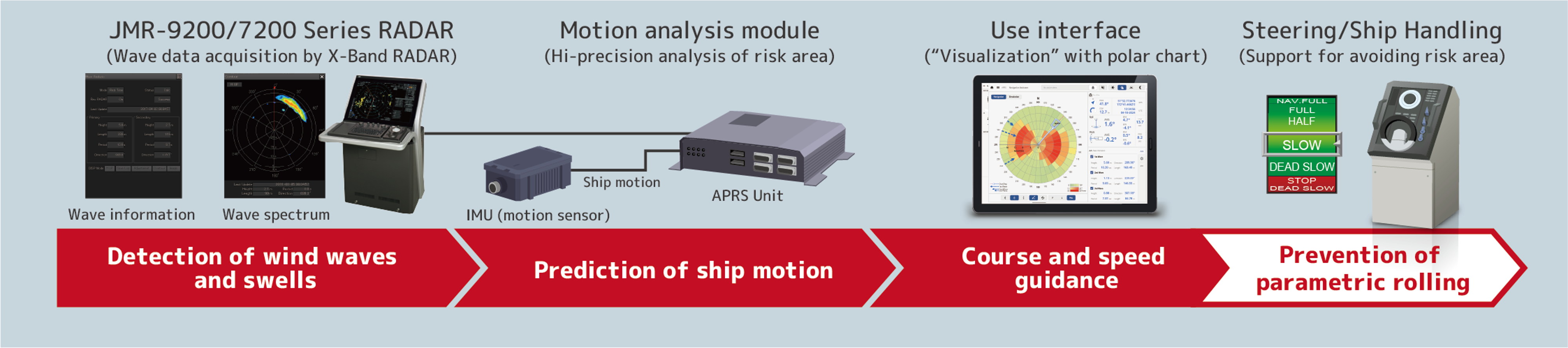
2. Comprehensive Support for Human-factor Mitigation, Early Detection and Incident Prevention
Difficulty in measuring actual swells (limitations of human capability)
→ Stable detection maintained by highly reliable Radar sensing
Difficulty in sustaining continuous measurement and monitoring (physical limitations)
→ 24/7 situational awareness enabled
Difficulty in assessing waves and swells at night (limitations of visual observation)
→ Radar-based wave analysis supports safe operation even in darkness
Difficulty in ensuring a consistent monitoring level among all crew (training and skill differences)
→ Provides stable support regardless of individual crew experience
3. Preventive Operations to Eliminate Costly Incidents
~Achieving zero accidents to fundamentally avoid accident-related costs~
Reduces the risk of incidents involving container loss and subsequent costs (insurance, damage compensation, marine pollution, etc.)
*From 2026, a mandatory reporting requirement for container loss will come into force.
Mitigates secondary impacts such as reduced operating fleet, lower transport volume, and broader effects on stakeholders
4. Easy Installation with Minimal Modifications
Requires only minimal equipment without large‑scale systems
Enables efficient implementation by utilizing existing on‑board equipment
Simple installation around the bridge area
What Is Parametric Rolling?
An Invisible Threat for Cargo Ships
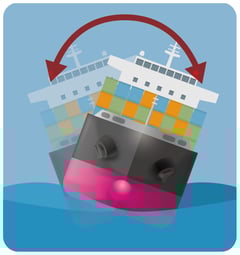
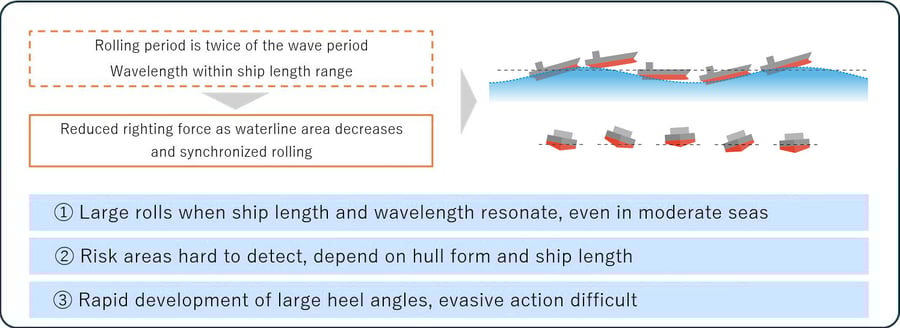
Parametric rolling is a resonance phenomenon in which the restoring force (stability) of a vessel changes periodically under specific sea conditions, causing roll motion to grow dramatically. It is said to occur more frequently on large vessels such as container ships and car carriers.
Unlike ordinary rolling, parametric rolling can suddenly develop under certain combinations of hull form, ship length and sea state, and can have a major impact in a very short time. Because it is difficult to predict and avoid, it is extremely important to use the latest meteorological and oceanographic data for route planning and early warning.
Phenomenon Overview
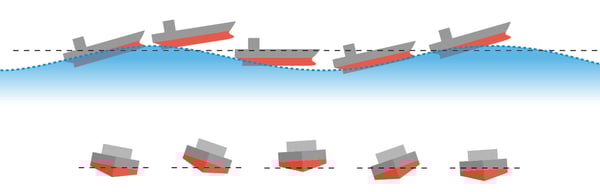
When the encounter wave period becomes close to the ship’s natural roll period, the ship’s stability temporarily changes and strong roll motions to both port and starboard can be induced.
When the vessel is exposed to following seas (waves from directly astern or quartering astern), the hull repeatedly climbs and descends the wave profile. As a result, the restoring force of the hull can periodically weaken, and in some cases the vessel may suddenly heel to a large angle.
Impact on Vessels
①Collapse or loss of cargo
Large roll angles can cause container stacks to collapse and vehicles or other cargo to shift, leading to accidents and cargo loss.
②Safety risks for crew and passengers
Severe motion may cause crew members to fall or be injured during work and movement on board.
③Structural damage
Abnormal heel angles can damage the ship’s structure itself as well as cargo securing and stowage structures.
④Difficulties in ship handling
Proper control of the vessel becomes difficult, and in the worst case there is a risk of capsizing.
Conditions of Parametric Rolling
Mandatory Reporting of Cargo Lost at Sea from 2026
- At MEPC 81, the amendment to Article V of MARPOL Protocol I was formally adopted as Resolution MEPC.384(81), establishing a mandatory reporting requirement in the event of container loss.
-At MSC 108, the amendments to Regulations 31 and 32 of SOLAS Chapter V were formally adopted as Resolution MSC.550(108).
・・When container loss or drifting containers at sea are detected, a “danger message” must be sent immediately after the loss is identified, and a “final report” must be submitted additionally where necessary.
These obligations also apply to third‑party vessels that encounter drifting containers while navigating.
Screens & Functions
The most important point is not to enter sea areas with a high risk of parametric rolling.
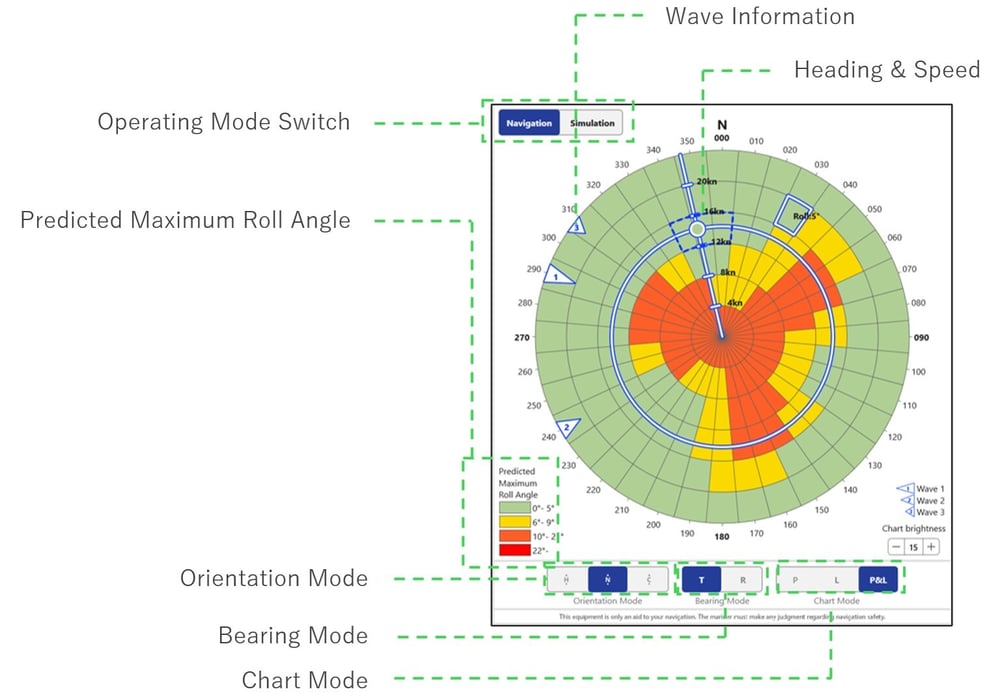
APRS accurately analyzes risk areas where parametric roll may occur and visualizes these areas around the vessel using a polar chart. By providing real-time recommendations for optimal course and speed, it helps prevent the vessel from entering areas where parametric roll may occur.
Polar Chart Screen
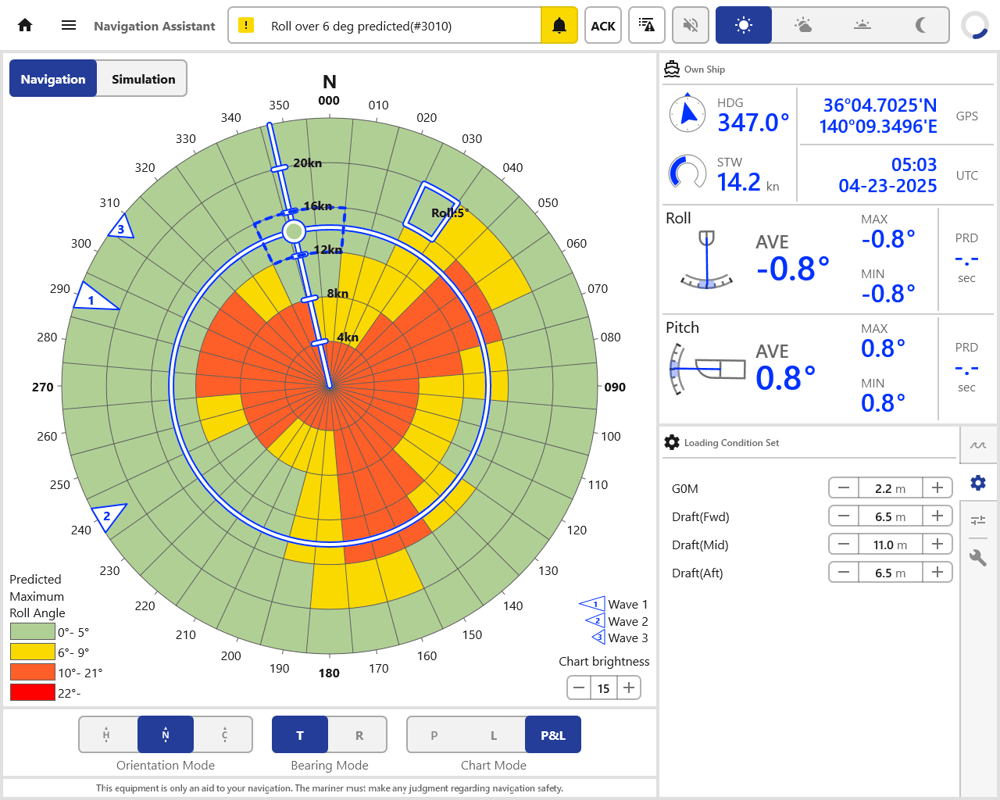
- Supports multiple wave and swell conditions
- By using the X‑band Radar wave analysis function, operation is possible even at night
- Visually assists in selecting course and speed
Screen Details
Trend Chart
Displays sensor data, IMU data and wave data from the past 60 minutes in trend graphs
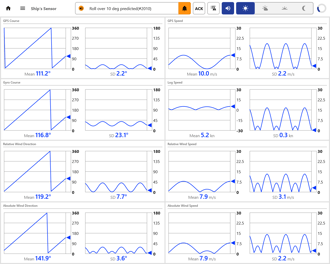
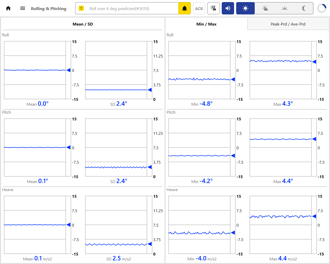
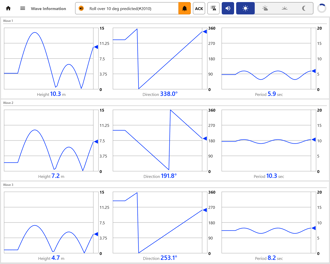
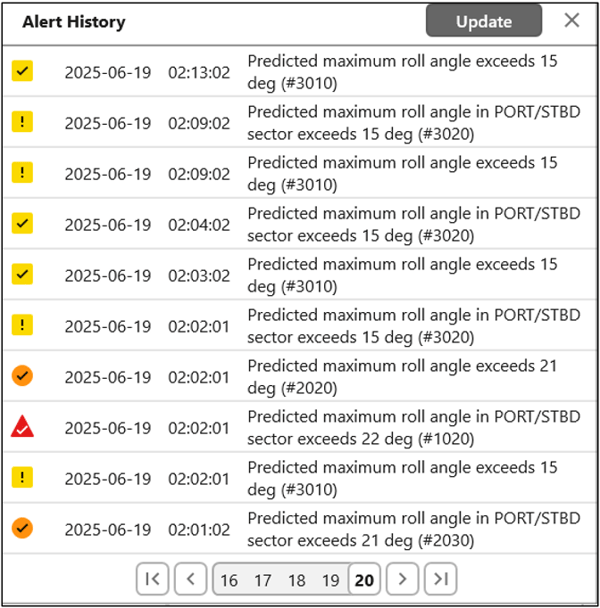
Alert Message
Alarms are shown in the on-screen alert bar according to the vessel’s navigation status and equipment operating conditions.
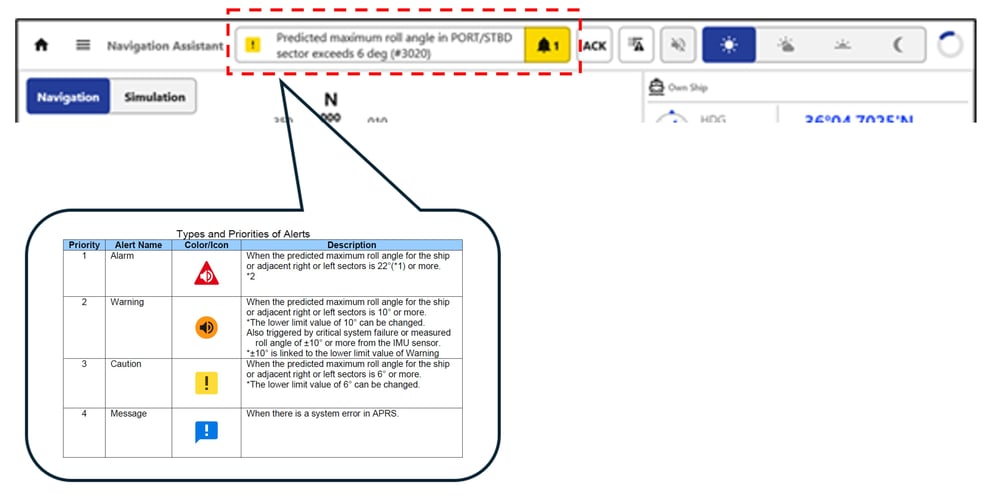
The alert history screen allows you to review past alerts.
System Architecture
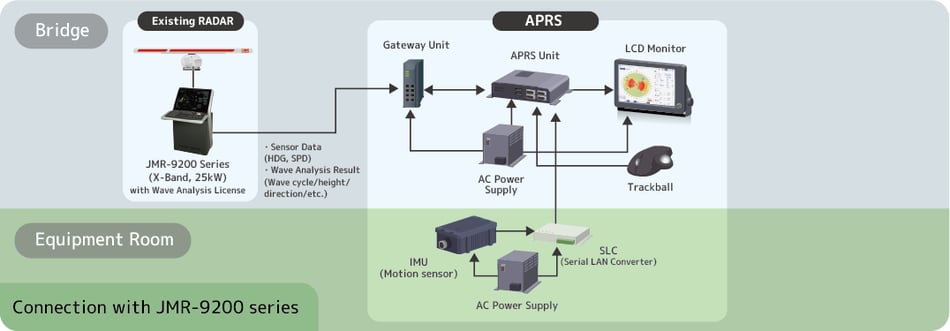
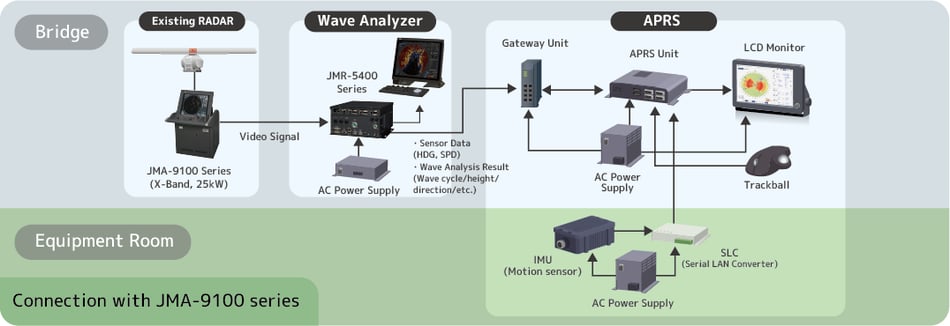
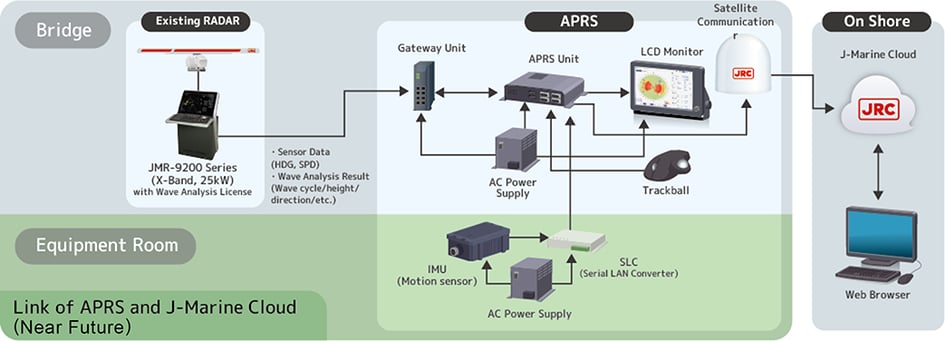
Equipment Configuration・Layout
Basic Component
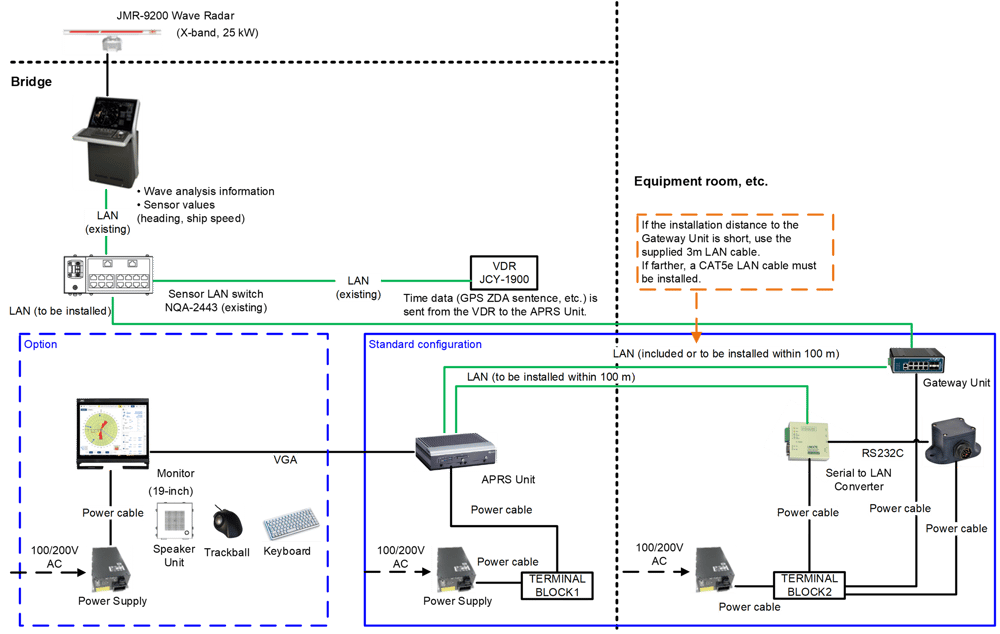
1) JAZ-501-0
IMU is installed outside the bridge.
Serial communication distance between the IMU and APRS Unit is long.
A Serial to LAN Converter is used to convert serial data to LAN for long‑distance transmission.
The Serial to LAN Converter and IMU are powered by a separate power supply unit (NBD-904), independent from the APRS Unit.
1-1) JAZ-501-0 Component
|
Item Name |
Model Name |
Q'ty |
Notes |
|
APRS Unit |
NDC-1895 |
1 |
Compliant with IEC60945 |
|
IMU |
TAG300N1000 |
1 |
Inertial Measurement Unit IMU sensor |
|
Power Supply |
NBD-965 |
1 |
Compliant with IEC60945, bridge side |
|
Power Supply |
NBD-904 |
1 |
Compliant with IEC60945, equipment room side |
|
Serial to LAN Converter |
NHA-2261 |
1 |
|
|
Gateway Unit |
H-P00018230 |
1 |
Standalone unit is IEC 60945 compliant; non-compliant when used in APRS system |
|
Ferrite Core |
E04SR401938 |
4 |
|
|
Cable Package |
CFQ-9870 |
1 set |
Contents: CFQ-9871 × 1 CFQ-9872 × 1 CFQ-9873 × 1 CFQ-9874 × 1 CFQ-9876 × 1 CFQ-9877 × 1 CFQ-9878 × 3 LAN cable × 1 (LD-CTN/BU3 or equivalent product) Mounting hardware |
|
Power supply plug |
H-7JTJD0064 |
1 |
|
|
Signal plug |
H-7JTJD0065 |
1 |
|
1-2) JAZ-501-0 System Component Diagram
2) JAZ-501-1
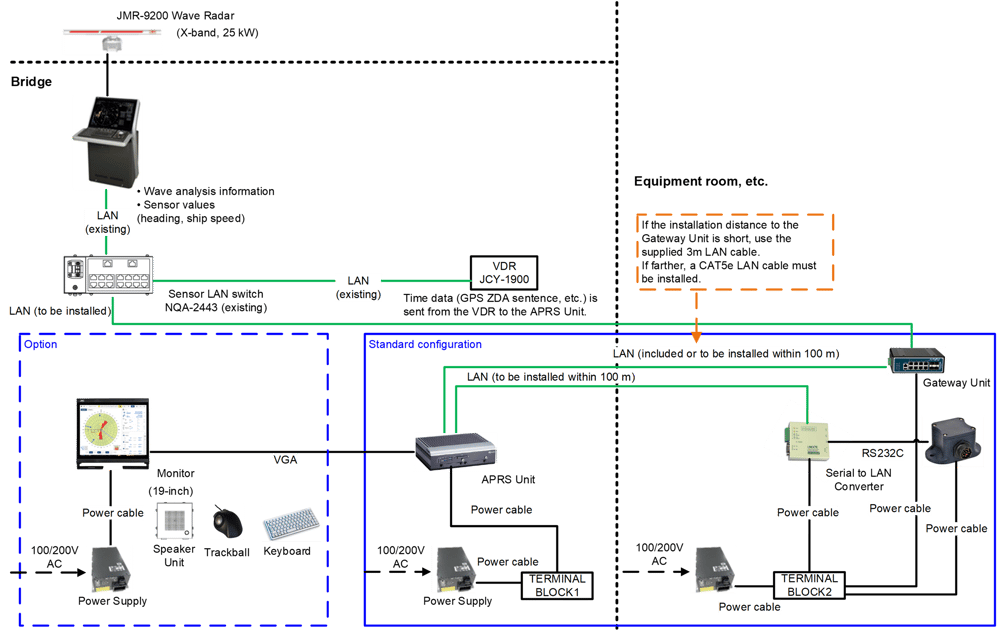
IMU is installed inside the bridge.
Serial data is not converted to LAN; the IMU is directly connected to the APRS Unit.
Connection can be extended using an RS-232C straight cable (up to 10 m).
The IMU shares the same power supply as the APRS Unit.
2-2) JAZ-501-1 Component
|
Item Name |
Model Name |
Q'ty |
Notes |
|
APRS Unit |
NDC-1895 |
1 |
Compliant with IEC60945 |
|
IMU |
TAG300N1000 |
1 |
Inertial Measurement Unit IMU sensor |
|
Power Supply |
NBD-965 |
1 |
Compliant with IEC60945 |
|
Gateway Unit |
H-P00018230 |
1 |
Standalone unit is IEC 60945 compliant; non-compliant when used in APRS system |
|
Ferrite Core |
E04SR401938 |
3 |
|
|
Cable Package |
CFQ-9870 |
1 set |
Contents: CFQ-9871 × 1 CFQ-9872 × 1 CFQ-9873 × 1 CFQ-9874 × 1 CFQ-9876 × 1 CFQ-9877 × 1 CFQ-9878 × 3 LAN cable × 1 (LD-CTN/BU3 or equivalent product) Mounting hardware |
|
Power supply plug |
H-7JTJD0064 |
1 |
|
|
Signal plug |
H-7JTJD0065 |
1 |
|
2-2) JAZ-501-1 System Component Diagram
3) JAZ-501-2
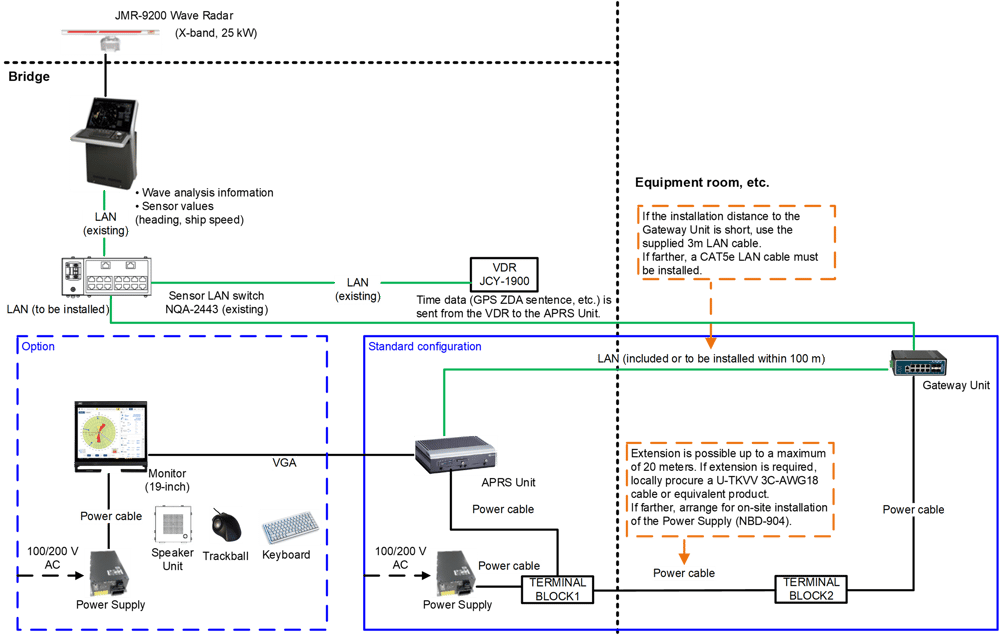
No IMU is installed in this configuration.
As the IMU used in other configurations is not CE‑marked, this model (JAZ-501-2) is used for:
Systems intended for the EU market
EU‑flagged vessels where an IMU cannot be equipped.
3-1) JAZ-501-2 Component
|
Item Name |
Model Name |
Q'ty |
Notes |
|
APRS Unit |
NDC-1895 |
1 |
Compliant with IEC60945 |
|
Power Supply |
NBD-965 |
1 |
Compliant with IEC60945, bridge side |
|
Gateway Unit |
H-P00018230 |
1 |
Standalone unit is IEC 60945 compliant; non-compliant when used in APRS system |
|
Ferrite Core |
E04SR401938 |
3 |
|
|
Cable Package |
CFQ-9870 |
1 set |
Contents: CFQ-9871 × 1 CFQ-9872 × 1 CFQ-9873 × 1 CFQ-9874 × 1 CFQ-9876 × 1 CFQ-9877 × 1 CFQ-9878 × 3 LAN cable × 1 (LD-CTN/BU3 or equivalent product) Mounting hardware |
|
Power supply plug |
H-7JTJD0064 |
1 |
|
|
Signal plug |
H-7JTJD0065 |
1 |
|
3-2) JAZ-501-2 System Component Diagram
JAZ-501 Series Options Items
|
Item Name |
Model Name |
Q'ty |
Notes |
|
Monitor |
NWZ-214 |
1 |
Compliant with IEC60945 19-inch LCD monitor |
|
Monitor Hood |
CWB-1618 |
1 |
Hood for 19-inch monitor |
|
Monitor Stand |
CWB-1659 |
1 |
Stand for 19-inch monitor |
|
Power Cable |
H-7ZCNA4150 |
1 |
Cable for 19-inch monitor |
|
VGA Cable |
CAC-30BK/RS |
1 |
Cable for 19-inch monitor |
|
Power Supply |
NBD-904 |
1 |
Compliant with IEC60945 For 19-inch monitor |
|
Keyboard |
NDF-369 |
1 |
Compliant with IEC60945 |
|
Trackball |
E38-76A31D-M017 |
1 |
Compliant with IEC60945 |
|
Speaker Unit |
NVA-9710 |
1 |
Compliant with IEC60945 |
|
Ferrite Core |
E04SR170730A |
2 |
For Speaker unit |
|
1 |
For trackball |
Performance Specifications
| Item | Specification |
| Polar chart update interval | Every 1 minute |
| Wave information | Up to 3 wave components |
| Roll angle display levels | 4 color‑coded levels (thresholds configurable) |
| Orientation | Selectable: Head / Course / North |
| Bearing | Selectable: True angle (0° = true north) / Relative angle (0° = ship’s heading) |
| Calculation mode | Selectable by click: Parametric / Linear / Parametric & Linear |
| Maximum calculation speed | Up to 24 knots |
| Polar chart bearing resolution | 10° |
| Screen brightness | 4 display modes: Bright / Day / Dusk / Night |
| Own ship information | Heading, speed through water, ship position, time |
| Motion sensor information | Roll angle (average, max, min, period), pitch angle (average, max, min, period) |
| Loading condition input | GOM, draft (fore / midship / aft) — 4 items |
| Time‑series graphs | Line graphs of each sensor and wave data for the last 60 minutes |
| Alarm indication | 4 types: Alarm / Warning / Caution / Message |
| Alarm output | On‑screen indication and speaker sound (buzzer) |
External Overview
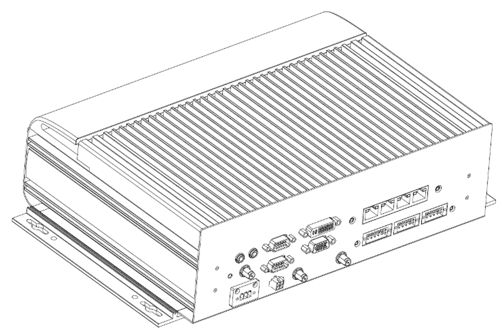
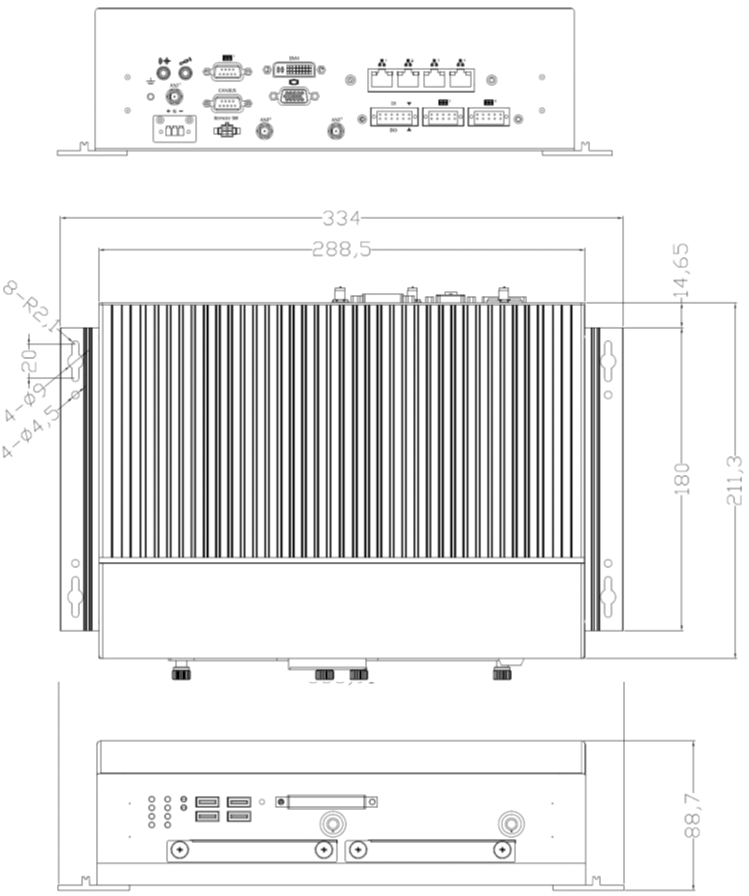
APRS Unit
Weight:5.8kg
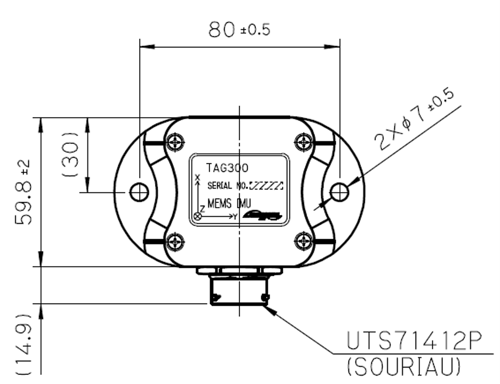
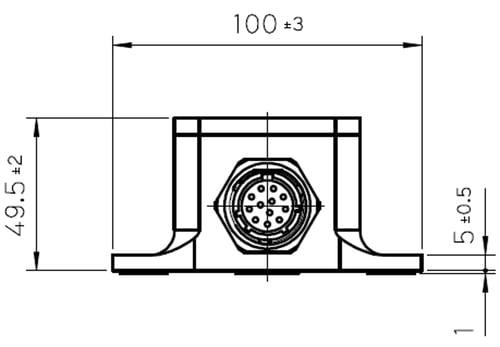
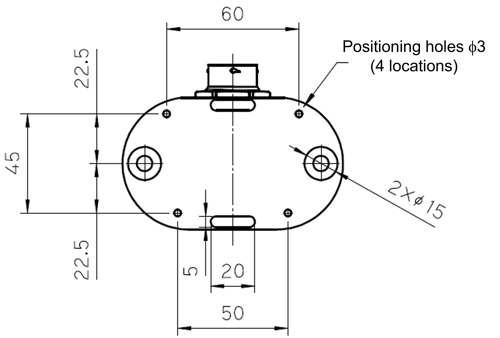
IMU : Motion Sensor
Weight:250g
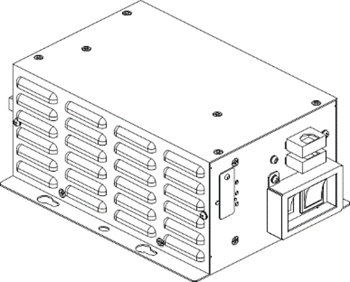
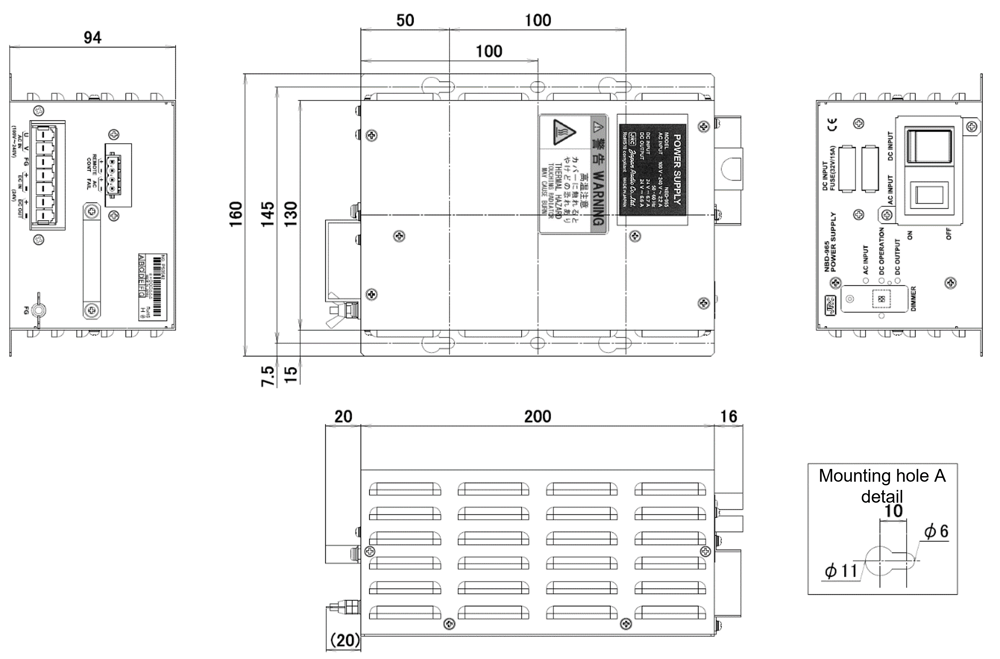
Power Supply (NBD-965)IEC60945 Compliant, for Bridge
Weight:2.1kg
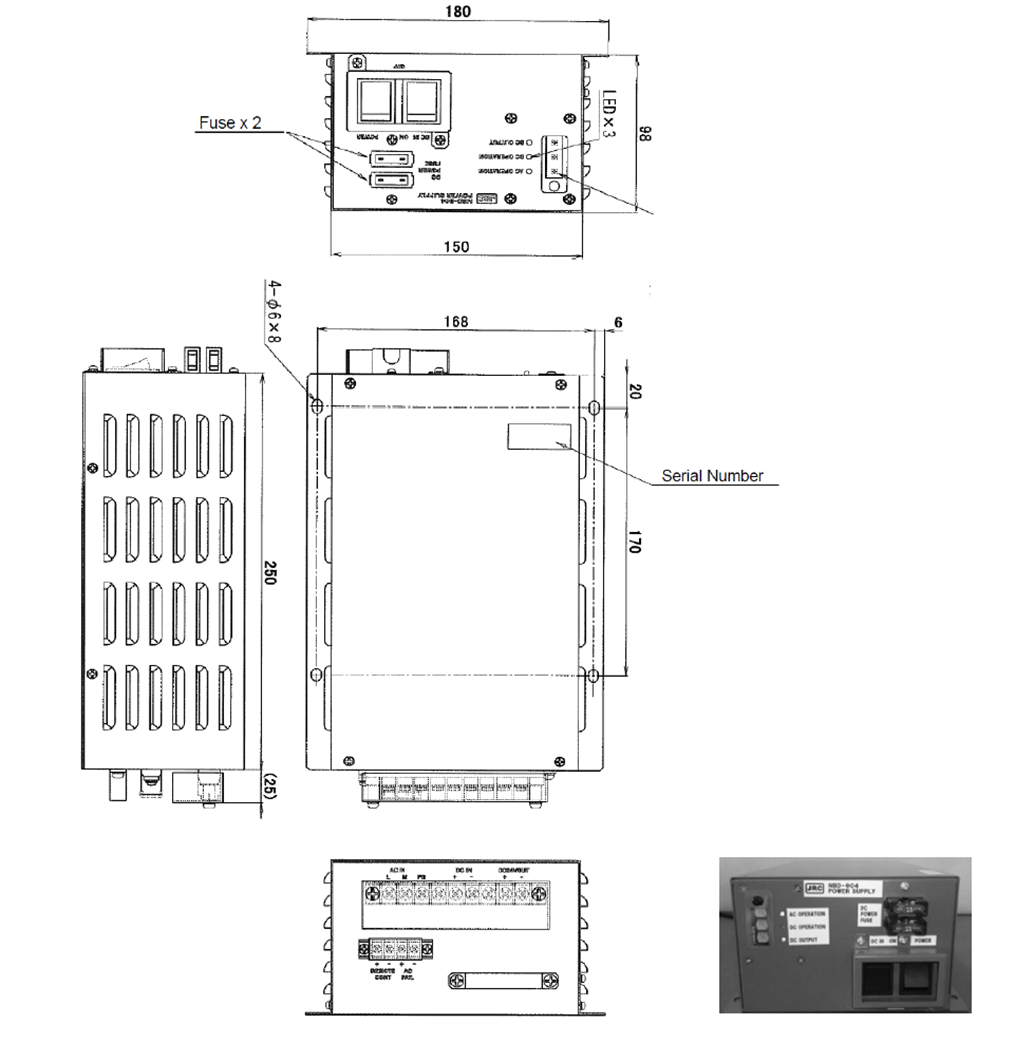
Power Supply (NBD-904)IEC60945 Compliant, for Equipment Room
Weight:2.1kg
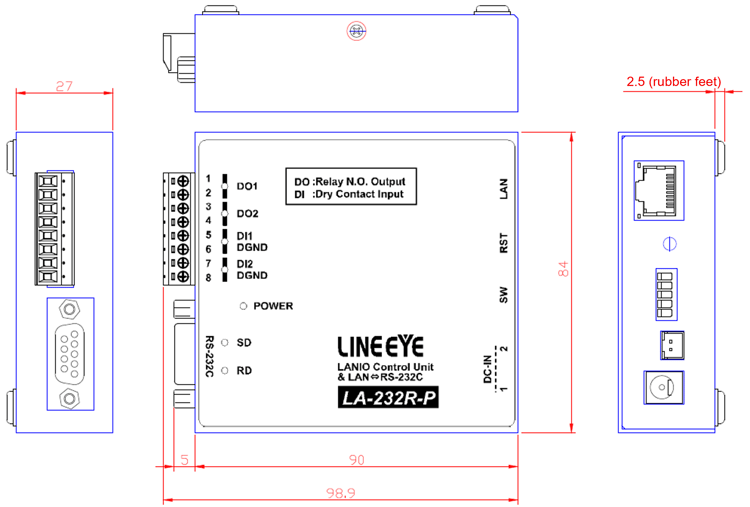
Serial to LAN Converter(NHA-2261)
Weight:290g
Gateway Unit
Weight:1.1kg
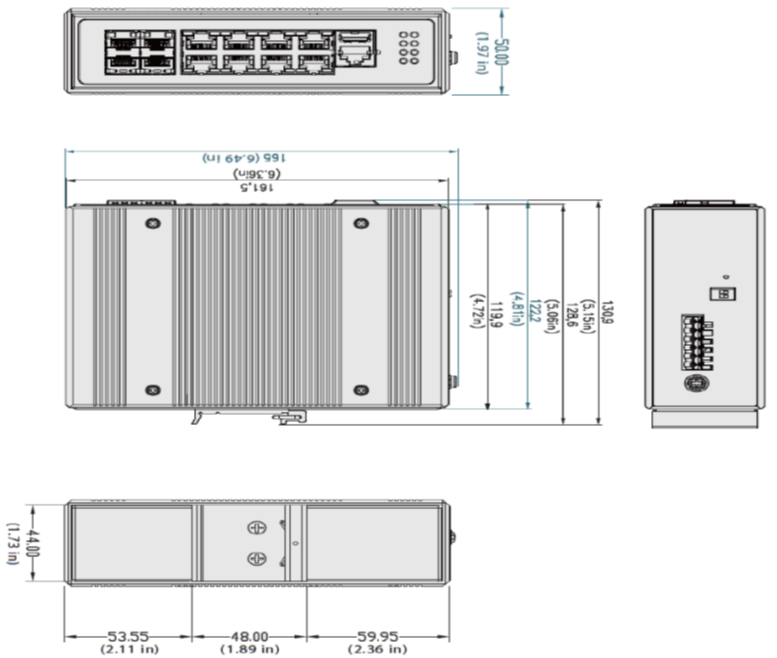
Monitor(Option)
Weight:5.8kg (with Bracket)
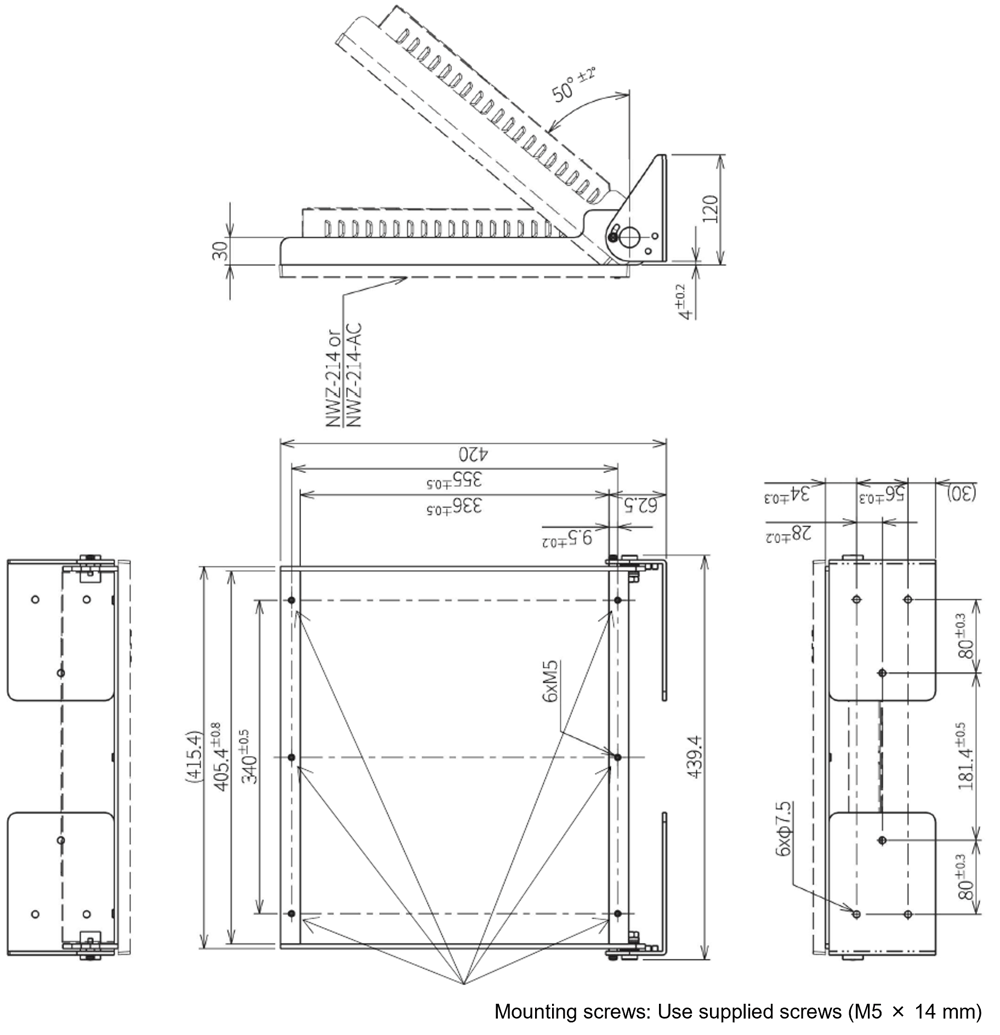
Product Inquiry

Related Products
Navigation Equipment