
World’s First Prototype of a New Wireless Tag Integrating Active and Passive RFID
– Aiming to Enhance Logistics Convenience for Future Use in Pallet Management Systems –
StudyJapan Radio Co., Ltd., Keio University, and UPR Corporation (hereinafter referred to as “the three parties”) have jointly developed a prototype of a new wireless tag (provisionally named the “DXh tag”), which extends the functionality of the wireless tag (DX tag) used in UPR’s pallet management system “Smart Pallet,”*1 a system utilizing wireless communication.
The conventional DX tag is an active wireless device powered solely by a primary battery. In contrast, the DXh tag combines the DX tag with a passive wireless chip that enables battery-less wireless communication. This hybrid design allows for fast data reading and writing as well as operation without a battery, which are key advantages of passive wireless communication.
By integrating the DXh tag into the Smart Pallet system, it becomes significantly easier to modify settings such as transmission frequencies, trigger ultra-low power wake-ups from sleep mode, facilitate joint pallet collection, and streamline cargo tracking by rapidly linking the pallet with the tagged cargo it carries.
Background
Pallets are indispensable in logistics, with approximately 500 to 600 million units in use in Japan alone. While pallets circulate both domestically and internationally, their management—including storage, collection, cleaning, and location management—requires significant effort, and losses are not uncommon. In response to the need to reduce management burdens and address logistics challenges such as the “2024 problem,” the use of rental pallets has been steadily increasing.
UPR Corporation, which provides rental and management services for pallets and logistics equipment, developed “Smart Pallet” in 2015, a pallet information management system that attaches wireless tags developed by JRC, known as DX tags, to pallets in order to identify the location of logistics containers and streamline their collection, cleaning, and reuse. The active RFID devices incorporated in these DX tags are manufactured by Nagano Japan Radio Co., Ltd., and more than 500,000 units have been deployed to date, contributing to the automation and efficiency of pallet management operations.
DX tags are active RFID devices powered by primary batteries and capable of transmitting radio signals on their own. By limiting their operation to intermittent transmission and management modes, they have achieved both a communication range of several hundred meters and a long operating life of approximately ten years without battery replacement. At the same time, the industry has also been pursuing the use of standard passive RFID tags in the UHF band. Although their communication range is limited to several meters, these tags enable rapid data reading and writing without the need for battery replacement.
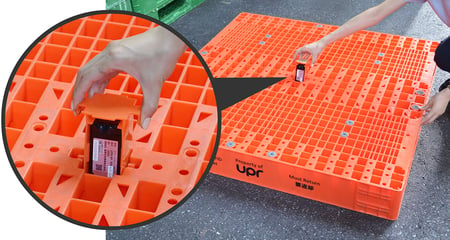
DX tags incorporated in the central section of the Smart Pallet
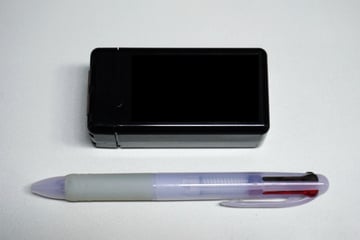
Challenges of DX Tags
Because DX tags are designed around intermittent transmission in order to achieve a battery life of ten years—the expected service life of a pallet—it can be difficult to communicate with them on demand. As a result, operations such as changing settings may require time before the tag responds. In addition, once the battery is fully depleted, the DX tag stops transmitting, making it impossible to confirm the tag’s location.
Furthermore, to support joint shipment and collection with rental pallets from other companies that already carry passive RFID tags, as well as batch inspection that links information on cargo and pallets, it became necessary to equip pallets with a standard passive RFID tag in the UHF band in addition to the DX tag. Active RFID offers a long communication range, but can leave some ambiguity when identifying the precise location of a pallet. Passive RFID, by contrast, has a shorter communication range, and this characteristic is expected to enable position identification on the order of several meters.
Solution through RFID Integration
To address these challenges, the three parties developed a prototype of the DXh tag by integrating into the DX tag a passive wireless chip compliant with ISO/IEC 18000-65, a new sensor-enabled RFID protocol being researched and developed by Keio University and others. The DXh tag enables data linkage through both active and passive wireless communication. This system represents the world’s first practical demonstration of a pallet information management system compliant with ISO/IEC 18000-65.
In addition to the long-range, long-life active RFID functions of conventional DX tags, the DXh tag integrates passive communication functions that enable rapid data reading and writing without requiring a battery. This makes flexible and practical operation possible in situations that were previously difficult to handle, including on-site setting changes, tag confirmation after battery depletion, and joint collection operations. Specifically, the system enables changes to settings such as radio transmission frequency, ultra-low-power wake-up from sleep mode, joint pallet collection, and cargo tracking management through rapid association of pallets with cargo carrying wireless tags.
The three parties constructed a demonstration system using the DXh tag at UPR’s pallet depot in Ichihara City, Chiba Prefecture, and conducted evaluation testing in July 2026.
This work includes the results of the research and development for expanding radio resources (JPJ000254) of the Ministry of Internal Affairs and Communications.
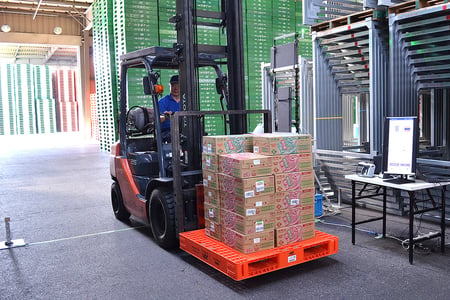
Smart Pallets equipped with DX tags passing through a gate, with cargo linked to the corresponding
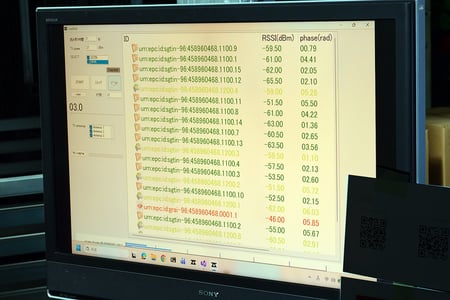
ID read when passing through the gate
*1 Pallet Management System “Smart Palette”
“Smart Palette” is a pallet management system that enables real-time monitoring of the location and operating status of pallets through communication devices (IoT devices) attached to them. By centrally managing pallet location, quantity, and operating history in the cloud, the system helps reduce loss and dwell time, streamline collection and redeployment operations, and optimize logistics costs.
Related Information
For further information: please contact
Japan Radio Co.,Ltd.Marketing and Public Relation Group
Mail:pr@jrc.co.jp